Introduction: Beyond the Hotel Experience
Egypt is often associated with iconic imagery: monumental temples, ancient tombs, vast deserts, and the life-giving Nile. For many travelers, accommodation plays an important role in comfort and relaxation, yet the true depth of an Egypt trip unfolds outside the hotel environment. Excursions form the connective tissue between history, landscape, culture, and everyday life. They transform a stay in Egypt from a passive holiday into an immersive travel experience.
Excursions in Egypt are not merely optional add-ons; they are central to understanding the country’s complexity and diversity. Through guided visits, organized trips, and structured explorations, travelers gain access to spaces, stories, and environments that cannot be experienced from within resort walls. This article provides a comprehensive overview of excursions in Egypt, analyzing their different forms and explaining how they enrich the journey by adding depth, variation, and lasting memories.
The Role of Excursions in the Egyptian Travel Context
Connecting Travelers with Place and History
Egypt’s cultural heritage spans thousands of years, and its landscapes are closely intertwined with human history. Excursions create structured opportunities to connect these elements. Visiting temples, archaeological sites, and historical cities allows travelers to move beyond abstract knowledge and encounter history in its physical context.
Excursions also provide orientation. They help travelers understand spatial relationships: how ancient cities developed along the Nile, how deserts shaped trade routes, and how modern settlements evolved around historical cores. This spatial awareness deepens comprehension and gives meaning to what might otherwise remain isolated impressions.
Adding Structure and Purpose to the Journey
A trip to Egypt often includes periods of relaxation, particularly in coastal or resort areas. Excursions introduce rhythm and purpose into the travel schedule. They create intentional moments of engagement, followed by phases of rest. This balance prevents monotony while avoiding the fatigue that can result from overly dense itineraries.
Cultural and Historical Excursions
Ancient Temples and Archaeological Sites
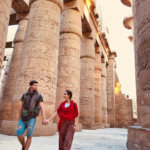
Cultural and historical excursions form the foundation of many Egypt itineraries. Visits to temples, tombs, and archaeological complexes provide insight into ancient belief systems, political structures, and artistic traditions.
These excursions are typically characterized by structured routes, explanatory narratives, and defined timeframes. They allow travelers to contextualize architectural elements, iconography, and inscriptions. Without such excursions, many historical sites would remain visually impressive but intellectually inaccessible.
Museums as Interpretive Spaces
Museums play a complementary role to outdoor archaeological excursions. They offer controlled environments where artifacts are preserved, categorized, and interpreted. Through museum visits, travelers gain a deeper understanding of daily life, craftsmanship, and continuity across historical periods.
Museum excursions also balance outdoor activities. They provide quieter, contemplative spaces that allow travelers to process information at a slower pace.
Cultural Continuity and Local Traditions
Not all cultural excursions focus solely on antiquity. Visits to traditional villages, workshops, or cultural centers highlight continuity between past and present. These experiences demonstrate how historical influences persist in architecture, agriculture, and social practices.
Such excursions broaden the narrative of Egypt, presenting it as a living culture rather than a static historical backdrop.
Desert Excursions: Landscape and Perspective
The Desert as a Defining Element
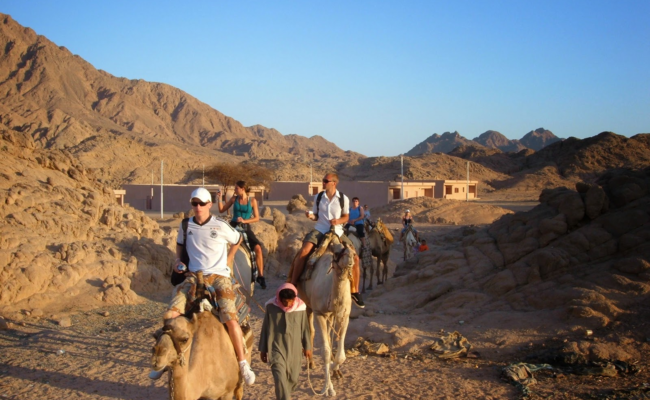
The desert occupies a central place in Egypt’s geography and imagination. Desert excursions offer access to vast open spaces that contrast sharply with urban environments and cultivated riverbanks. These experiences emphasize scale, silence, and natural forces.
Desert trips often include journeys through sand dunes, rocky plateaus, or oases. They provide insight into survival strategies, historical trade routes, and the relationship between human settlement and arid landscapes.
Experiential Qualities of Desert Travel
Beyond educational value, desert excursions have a strong experiential dimension. The absence of visual clutter and the reduced sensory input encourage heightened awareness. Time is perceived differently, and attention shifts toward light, texture, and movement.
These qualities make desert excursions particularly memorable. They often remain among the most emotionally resonant experiences of an Egypt trip.
Integration into the Overall Itinerary
When integrated thoughtfully, desert excursions act as a counterbalance to intensive cultural programs. They provide psychological space and help travelers absorb previous impressions. This contrast enhances the overall coherence of the journey.
Sea and Boat Excursions
The Red Sea and Coastal Experiences
Egypt’s coastline introduces a maritime dimension to the travel experience. Sea excursions include boat trips, snorkeling, diving, and island visits. These activities highlight Egypt’s ecological diversity and extend the travel narrative beyond land-based exploration.
Marine excursions emphasize color, movement, and sensory immersion. The underwater environment offers a form of exploration that differs fundamentally from historical sightseeing.
Boat-Based Perspectives
Boat excursions, whether on the sea or inland waterways, alter the traveler’s perspective. Movement across water creates a continuous visual flow and a sense of gentle progression. This mode of travel encourages observation rather than constant activity.
Boat trips often function as transitional experiences, linking different locations while maintaining a relaxed pace.
Emotional and Physical Benefits
Sea excursions contribute to physical relaxation and emotional balance. The combination of water, light, and open horizons has a calming effect that complements more intellectually demanding cultural excursions.
City Excursions: Understanding Modern Egypt
Urban Exploration and Daily Life
City excursions introduce travelers to contemporary Egypt. Markets, neighborhoods, public spaces, and transportation systems reveal social dynamics that are absent from isolated tourist zones.
These excursions emphasize observation and interaction rather than monument-focused sightseeing. They provide insight into rhythms of daily life, economic activity, and social organization.
Historical Layers within Cities
Many Egyptian cities contain visible layers of history. Urban excursions often combine modern environments with historical quarters, religious sites, and colonial-era architecture. This layering illustrates continuity and adaptation over time.
Understanding cities as evolving entities helps travelers integrate ancient and modern impressions into a cohesive understanding of the country.
The Experiential Value of Excursions
Creating Meaningful Memories
Excursions are primary generators of travel memories. They provide distinct settings, narratives, and emotional markers. Unlike passive leisure activities, excursions require engagement, decision-making, and attention, all of which strengthen memory formation.
Depth through Context
By situating landscapes, monuments, and communities within broader frameworks, excursions add depth to the travel experience. They transform visual impressions into structured understanding.
This depth distinguishes travel from simple consumption of sights.
Diversity within a Single Destination
Egypt’s excursions showcase the country’s internal diversity. Cultural, natural, and urban experiences coexist within relatively short distances. This diversity prevents experiential fatigue and sustains interest over longer stays.
Planning and Balance
Matching Excursions to Travel Goals
Effective travel planning aligns excursions with individual interests and energy levels. Cultural enthusiasts, nature-oriented travelers, and those seeking relaxation benefit from different combinations of activities.
A balanced selection ensures that excursions enhance rather than overwhelm the journey.
The Importance of Timing and Pacing
Excursions are most effective when integrated into a well-paced itinerary. Allowing sufficient time for rest before and after excursions improves focus and enjoyment. Overcrowded schedules reduce the qualitative impact of even the most impressive sites.
Excursions as a Bridge Between Observation and Understanding
Excursions act as mediators between the traveler and the destination. They translate abstract interest into tangible experience. Through guided interpretation, structured movement, and contextual framing, excursions help travelers move from surface-level observation to informed understanding.
This mediating role is particularly significant in Egypt, where historical depth and environmental contrasts can be challenging to interpret without contextual guidance.
Long-Term Impact of Excursion-Based Travel
Lasting Impressions and Reflection
The impressions formed during excursions often shape long-term perceptions of Egypt. Encounters with landscapes, historical narratives, and everyday life continue to influence reflection long after the journey ends.
Encouraging Return Visits and Deeper Exploration
Well-designed excursions frequently inspire further interest. Travelers may return with new questions or a desire to explore specific regions in greater depth. In this way, excursions contribute to a sustained relationship with the destination.
Conclusion: Excursions as the Core of the Egyptian Travel Experience
Excursions are not peripheral activities within an Egypt trip; they are central to its meaning and impact. Through cultural and historical exploration, desert and sea experiences, and urban encounters, excursions reveal the country’s complexity and richness.
They add structure, diversity, and emotional resonance to the journey, transforming a hotel-based stay into a multidimensional travel experience. By connecting travelers with history, landscape, and contemporary life, excursions ensure that Egypt is not only seen, but understood and remembered.